
HeartBuddy AED Readiness
Be ready before a cardiac emergency.
A practical introduction to automated external defibrillators, emergency response and equipment readiness for workplaces, institutions and public environments.
What is an AED?
A portable device built to guide emergency response.
An automated external defibrillator analyses the heart rhythm of a person in suspected sudden cardiac arrest. If the device detects a rhythm that may respond to defibrillation, it guides the rescuer through the appropriate next step. It will not advise a shock unless its analysis indicates one.
An AED supports—rather than replaces—calling emergency services and providing CPR. Formal CPR/AED training is strongly recommended.
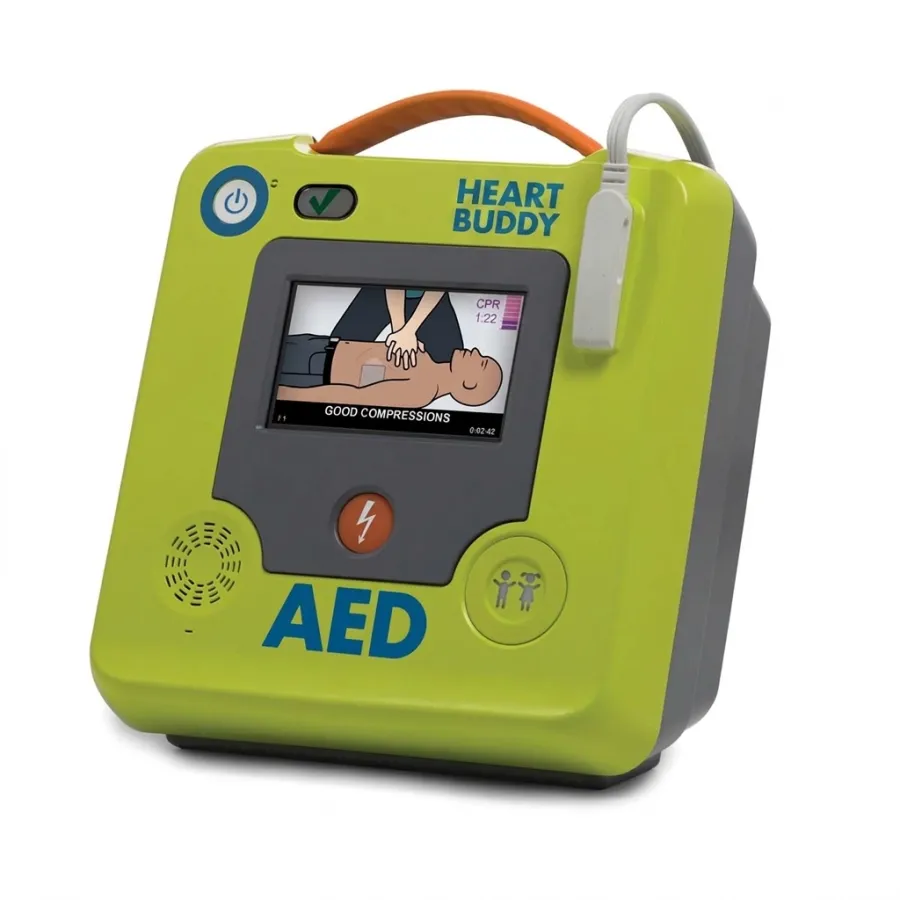
Emergency sequence
Act quickly. Follow the device.
Call for emergency help
Activate local emergency medical services immediately and send someone to retrieve the AED.
Begin CPR
If the person is unresponsive and not breathing normally, begin CPR if you are able and follow trained emergency-response procedures.
Turn on the AED
Expose and dry the chest, attach the pads as shown on the diagrams, and listen carefully to the device prompts.
Follow every prompt
Keep everyone clear during rhythm analysis and shock delivery, then resume CPR when instructed.
AED placement
Visible, accessible and clearly assigned.
Placement should consider facility size, occupancy, operating hours, higher-risk locations, locked areas and the time required to retrieve the device. AEDs should be easy to identify and available to intended responders—not hidden in a store room or inaccessible office.
Routine readiness checklist
Start a conversation